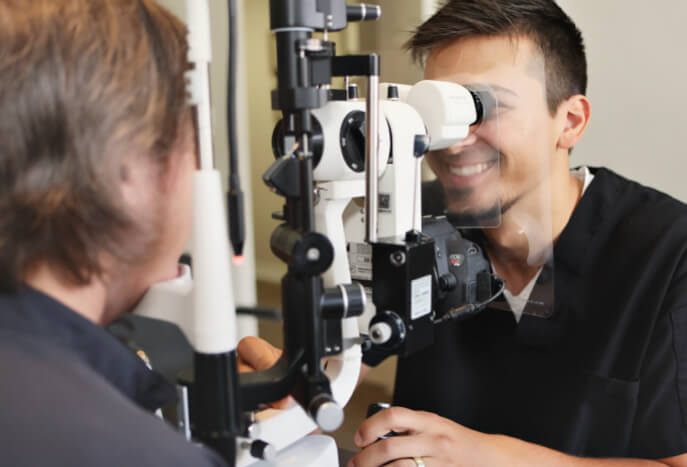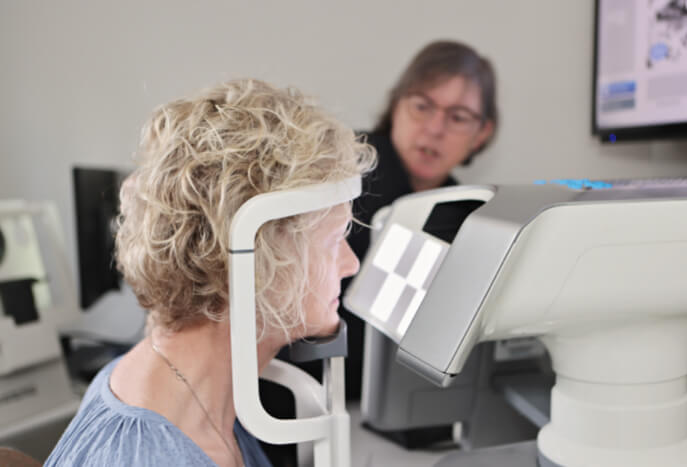


A comprehensive eye exam is much more than a basic vision screening. It involves a thorough review of your family history and medical history, along with several advanced tests and evaluations.
These tests include a slit lamp examination, visual field test, colour blindness test, and tonometry (to measure the pressure within your eye). You may need to have your pupils dilated, which can cause sensitivity to light and blurred vision for a few hours.
Vision and Learning
Good functional vision is essential to learning, and children especially need clear eyesight for their academic progress. Without adequate vision, kids can quickly fall behind in school and begin to develop coping mechanisms that can look a lot like the behavioural issues so commonly seen in children today.
If left untreated, vision problems can have serious consequences for an individual’s life and career. It’s critical that everyone, both children and adults, get regular comprehensive eye exams.
Comprehensive eye exams run the full gamut of tests, from assessing visual acuity to performing eye dilation to checking for eye diseases and disorders. A common procedure is the Ishihara colour plate test, which involves looking at a series of coloured dots and identifying the one that stands out as being a certain colour. Other important tests include an ocular motility test and optical coherence tomography. These types of tests allow eye doctors to monitor the progression of conditions such as retinal detachment and age-related macular degeneration.
Eye Health
A regular comprehensive eye exam will check for refractive errors (myopia or nearsightedness, hyperopia or farsightedness and astigmatism), which account for about 80% of vision impairment in the United States. It will also test your visual acuity, which is how sharply you can see objects both at a distance and up close. To do this, the doctor will shine a light into your eyes and ask you to read letters from an eye chart.
Your eyes are the only part of your body where doctors can directly view blood vessels, nerves and tissues. As a result, the blood vessels and nerves found in your eyes can be telltale signs of diseases or conditions that may be lurking elsewhere in your body.
An eye exam can also catch glaucoma, which can lead to permanent vision loss. But early detection can help slow down the progression of the disease and provide a better chance of preventing irreversible damage.
Computer Vision Syndrome
The high visual demands of using computers, tablets and digital screens make many people susceptible to computer vision syndrome (CVS). CVS symptoms are most likely to appear when viewing a screen for more than two hours a day, without taking regular breaks or at an improper screen distance.
CVS may cause eyestrain, dry eyes, headaches and blurred vision that comes and goes. Symptoms may also include neck and shoulder pain or stiffness, poor posture and light sensitivity.
Eye care professionals are trained to identify the telltale signs of CVS and recommend treatments that will help patients manage it, such as specialized blue-light filter glasses, visual therapy sessions and a change in screen use habits. A comprehensive eye exam can include a patient history assessment, tests to measure visual acuity and refractive error, and a number of diagnostic tests, including corneal health evaluations with a corneal topographer and retinal imaging. These tools allow your doctor to see the layers of the retina and detect any early signs of glaucoma or macular degeneration.
Eye Injury
A scratch to the eye’s surface (cornea) can leave the eye vulnerable to bacterial or fungal infection. If untreated, the eye infection could spread quickly and threaten sight. A punctured eyeball is very serious and should be seen in the emergency room immediately. It most often occurs during play, such as with a toy sword or being poked in the eye by someone else.
Bleeding on the inside of the eye is also dangerous and needs immediate medical attention. It can be caused by straining during coughing or by blunt trauma. It can also be caused by leakage from breaks in blood vessels that line the clear part of the eye (the conjunctiva) that covers the white part of the eye (sclera). These bleeding spots are called subconjunctival hemorrhages, and they can make the white sclera look bright red.
If you’re ready to ensure healthy vision and eyesight with a comprehensive eye exam, get in touch today at 519-941-6761.