
Struggling with dry eyes while wearing contact lenses is a challenge for many people. It often feels like a constant battle between clear vision and physical comfort, leaving you to wonder if you have to choose one or the other. The good news is that you don’t have to.
The right contact lenses for dry eyes are typically made from silicone hydrogel materials or feature moisture-retention designs that stabilize your tear film. It all depends on what works best for your unique eyes, as properly fitted contact lenses can help you enjoy all the benefits without the irritation.
How Dry Eyes and Contact Lenses Interact
Your eyes rely on a thin layer of tears to stay comfortable and see clearly. When you wear contact lenses, they sit directly on that tear film, and that changes how your tears behave. The lens can break up the tear film faster than normal, which speeds up evaporation and leaves your eyes feeling dry before the day is even over.
Signs Your Lenses May Be Affecting Your Eyes
Dryness doesn’t always feel like dryness at first. Sometimes it shows up as blurry vision in the afternoon, or eyes that water constantly.
Watch for these common indicators:
- Redness, irritation, or a burning sensation
- Blurry or watery vision that fluctuates throughout the day
- A gritty feeling, similar to having a piece of dust in your eye
- Increased sensitivity to light
- Tired eyes by the late afternoon or evening
What to Look for in a Contact Lens
Not all contact lenses are made the same. Focusing on specific features can help you narrow down which lenses may provide the comfort you need.
Lens material is a key factor in how your eyes feel. Silicone hydrogel is a common choice because it allows a high amount of oxygen to pass through to your cornea. This breathability can reduce the irritation that often occurs during long hours of wear.
While it seems logical to assume higher water content is better, that isn’t always the case. Lenses with moderate water content often hold onto moisture more effectively, whereas high-water lenses can sometimes pull moisture away from your eye to maintain their own shape.
You should also look for moisture-retention technology. These designs keep a layer of hydration locked at the lens surface. That small difference can make contact lens wear much more comfortable if dry eyes are a concern for you. Conditions like meibomian gland dysfunction can also affect how well your eyes stay lubricated while wearing contacts, which is another reason a well fitted lens matters.
Types of Contact Lenses for Dryness
Different lens categories offer various benefits depending on your lifestyle and the severity of your symptoms.
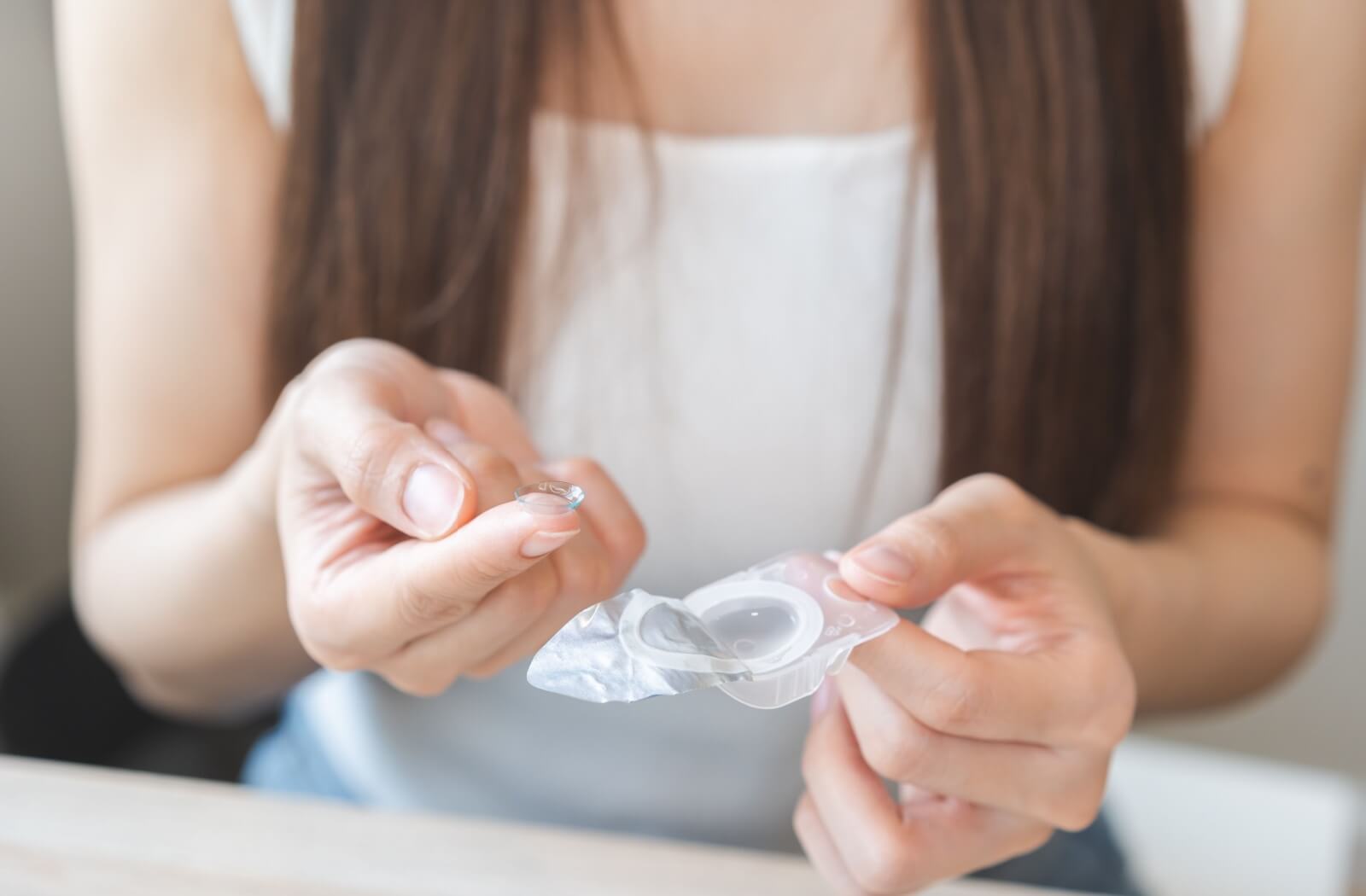
Daily Disposable Lenses
You wear a fresh pair every day and throw them out at night. That daily reset means less protein and deposit buildup on the lens surface, which is one of the main reasons lenses start to feel uncomfortable as the day progresses.
Many daily disposables are designed with moisture-retention technology, making them a popular starting point for people with mild to moderate dry eye symptoms.
Silicone Hydrogel Lenses
These lenses allow significantly more oxygen to reach your cornea compared to older lens materials. That oxygen flow can reduce the dryness and redness that come from wearing lenses for extended periods. Silicone hydrogel lenses come in daily, weekly, bi-weekly, and monthly options, so there’s flexibility depending on your lifestyle and budget.
Simple Habits That Help Reduce Dryness
The lens you choose matters, but how you care for your eyes while wearing contacts also makes a difference. A few small adjustments to your daily routine can support your eye health and make lens wear more sustainable:
- Use preservative-free rewetting drops throughout the day to supplement your natural tears.
- Follow the 20-20-20 rule during screen time: every 20 minutes, look at something 20 feet away for at least 20 seconds.
- Stay hydrated by drinking plenty of water and use a humidifier in dry indoor environments.
- Clean your lenses strictly according to your optometrist’s instructions if you use extended wear lenses.
Why a Contact Lens Fitting Matters
A contact lens fitting goes beyond measuring your prescription. An optometrist can evaluate your tear film health, your eye shape, and your daily habits before recommending a lens. That information shapes the recommendation.
For example, someone who spends 8 hours a day on a computer has different needs than someone who works outdoors or has seasonal allergies. The fitting process takes all of that into account. Your optometrist can then tailor the lens type, replacement schedule, and care routine to what works for your eyes specifically, rather than a one-size-fits-all solution.
Rediscover Comfort for Your Eyes
You don’t have to settle for scratchy, tired eyes at the end of every day. If your current lenses cause irritation, there are many options designed to help you maintain a healthy tear film and hydrated ocular surface.
Contact the team at Orangeville Optometric Centre to schedule a comprehensive eye exam or a specialized contact lens fitting. Let us help you find the right lenses so you can focus on your day instead of your discomfort.