Relieve Irritated Dry Eyes
We use our eyes constantly throughout the day, yet we rarely give them a second thought—unless they become uncomfortable. When irritation strikes, it’s all we can think about. Adults might reach for redness-relieving eye drops, while children often rub their eyes. Unfortunately, these quick fixes don’t address the underlying cause of tired, scratchy eyes.
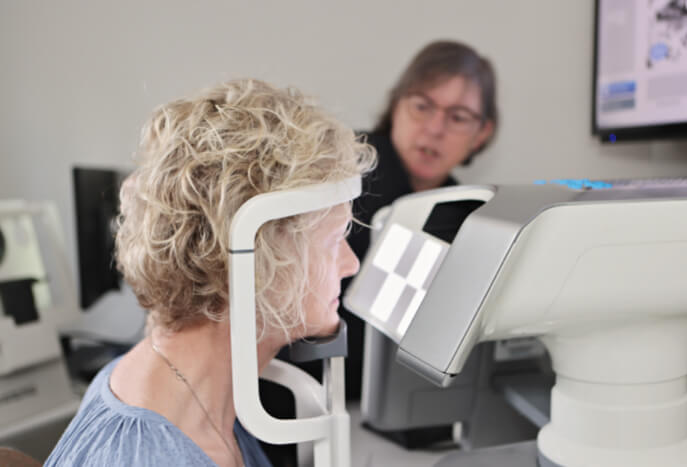
If your eyes are uncomfortable, it’s always wise to visit us to rule out any serious underlying conditions. Left untreated, dry eye can lead to long-term infections and eye damage. Our dry eye assessments include a thorough evaluation using specialized diagnostic tools to determine the root cause of your discomfort.
Book an appointment today for a comprehensive eye exam to diagnose your dry eye and start your journey toward relief.

What Is Dry Eye?
Dry eye, also called ocular surface disease, is an uncomfortable condition caused by an imbalance in the tear film. It occurs when the eyes either don’t produce enough tears or produce tears with a poor chemical composition.
Dry eye can have many causes, so it is important to get a professional assessment and diagnosis to determine an effective treatment plan.
Symptoms of Dry Eye
Dry eye may cause symptoms such as:
- Stringy mucus in or around your eyes
- Gritty or scratchy feeling in the eyes
- Stinging or burning
- Feeling like something is in your eyes
- Red, irritated eyes
- Excessive tearing
- Blurry vision
- Sensitivity to light
- Tired eyes
- Discomfort while wearing contact lenses
Common Causes of Dry Eye
Causes and contributing factors for dry eye vary, but some common root causes include:
- Contact lens wear
- Hormonal changes or aging
- Environmental conditions, such as air pollution, wind, and low humidity
- Systemic health conditions, such as rheumatoid arthritis, thyroid disease, Parkinson’s disease, or Sjögren’s Syndrome
- Certain medications, such as antidepressants, antihistamines, and oral contraceptives
- Meibomian gland dysfunction (MGD)
- Blepharitis or Demodex mites
- Ocular rosacea
Our Approach to Dry Eye
The first step of our dry eye treatment plan is a thorough in-office assessment, which will allow us to determine the cause of your symptoms and discomfort. This step allows us to determine the root cause of your symptoms and design a treatment plan that targets the source of the problem to provide you with long-lasting relief.
Dry eye can be caused by an imbalance of the tear film (evaporative dry eye) or a lack of sufficient tears (aqueous-deficient dry eye). Your tear film is made up of 3 layers: the mucin layer, the water layer, and the oil layer. Typically, in those with evaporative dry eye, there is not enough oil being produced to prevent the water layer from evaporating too quickly.
To determine which type of dry eye you have, we’ll complete a set of standardized tests, including a questionnaire and a measurement of your tear quantity and quality.
The Diagnostic Process
To complete your dry eye diagnosis, we will review the frequency and severity of your signs and symptoms by asking you to complete the OSDI-6 questionnaire, the most up-to-date dry eye questionnaire available.
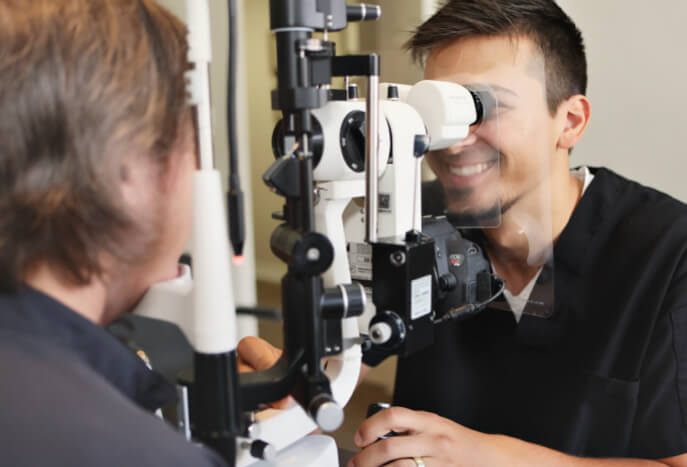
Afterwards, we may perform a tear breakup test. During this test, your optometrist will look at your eye through a slit lamp microscope. After placing a small amount of dye in your eye, they will measure how long it takes for the tear film to cover the entire surface of your eye.
Finally, your optometrist may use a special imaging device called a meibographer to capture images of your meibomian glands. These tiny glands line your eyelids and produce the oily layer of the tear film. A common cause of dry eye is Meibomian Gland Dysfunction (MGD), which occurs when the meibomian glands become congested or obstructed due to inflammation, limiting the flow of oil from the glands onto the tear film.
Our Dry Eye Treatments
After your assessment is complete, we’ll discuss the results with you and recommend different treatment options tailored to the cause of your dry eye.
Depending on the severity of your condition and your preferences, this may include energy-based treatments like IPL and RF therapies, take-home treatments like prescription eye drops or eye masks, or in-office treatments such as meibomian gland expression and amniotic membrane therapy.
The energy-based treatments will be recommended on a personalized schedule depending on your needs. Most patients begin with 4 treatments spaced about 2–3 weeks apart. After these sessions, your optometrist will reassess your eyes and discuss your symptoms.
If four treatments have resolved your dry eye signs and symptoms sufficiently, your optometrist will put you on a maintenance plan to maintain your relief for the long term.
Learn more about each of our treatment options:
- Darwin IPL: Intense pulsed light therapy uses precise light energy to target inflammation. It can treat ocular rosacea, meibomian gland dysfunction, and inflammatory dry eye, and has been shown to decrease Demodex mites and bacteria around the eyelids.
- Darwin RF: Radiofrequency energy is applied to the eyelids and surrounding area to gently heat the skin and stimulate collagen production and gland re-building. RF also helps to soften the oils in the meibomian glands, helping to clear blockages and improve the quality of the tear film.
- LipiFlow Thermal Pulsation System: This device uses heat and gentle pressure to massage and unclog the meibomian glands for better oil production and tear quality.
- Eye masks: Reusable, warm and moist compresses designed to relieve dry eye symptoms and encourage better oil flow from the tear glands.
- Eyelid sprays: Hypochlorous spray helps to support a healthy tear film by clearing debris, killing bacteria and reducing inflammation, all which contribute to your dry eye symptoms.
- Medicated eye drops: Prescription eye drops that reduce inflammation, increase tear production, or limit the evaporation of tears.
- Omega-3 supplements: Omega-3 fatty acids can improve the tear film by enhancing the quality of the oil layer produced by the meibomian glands. This can reduce tear evaporation, increase overall tear production, and decrease inflammation.
- Artificial tears: Artificial tears mimic your eyes’ natural tears, and different formulations are recommended depending on the type and severity of your dry eye.
- ZEST: Zocular Eyelid System Treatment is an in-office cleaning and exfoliation treatment that eliminates bacteria, dead skin cells, and other particles that can clog the meibomian glands and cause inflammation. During the treatment, a special foam cleanser is applied to the eyelids and gently massaged to cleanse the area. The treatment improves the natural function of the glands, reduces inflammation, and enhances tear film quality.
- Amniotic membrane therapy: Amniotic membrane therapy helps to heal the surface of the eye in cases of moderate to severe dry eye. These contact lens bandages use amniotic tissue to support and accelerate the eyes’ natural healing process.
- Meibomian gland expression: When oil buildup has blocked the meibomian glands, it needs to be expressed for oil to flow properly again. This process includes a manual massage of the eyelids to clear the blockages. Expression is often done after IPL and RF have softened the oils.
Find Relief from Dry Eye
Our goal is to help you find long-lasting relief from your dry eye symptoms. We’ll work with you to find a targeted solution based on your reported symptoms and our thorough assessment. This tailored approach keeps your long-term comfort at the centre of our care plan.
If you’re experiencing the irritating, uncomfortable symptoms of dry eye, don’t suffer through your day. Book an appointment with us to discuss your options and find relief.
CAN YOUR GLASSES DO THIS?
For individuals ready to step into the future, we carry Ray-Ban and Oakley Meta AI glasses. Listen to music, take a phone call, or capture a video, all from your glasses.
Or enhance your connections with Nuance Audio Glasses for directional hearing amplification.


OUR FEATURED EYEWEAR BRANDS
Visit Our Location
We’re located on First Street, just across from the Lord Dufferin Centre. Parking is available behind the building with an accessible parking stall beside the entrance to the lot.
Our clinic has an accessible exam lane to accommodate individuals with wheelchairs or other mobility aids.
Our Address
Contact Information
- Phone: 519-941-6761
- Email: info@orangevilleoptometrists.ca
Our Hours
*Open on alternating Saturdays. Book an appointment in advance.
Our Google Reviews
What Patients are Saying
Amazing Doctors. Friendly and knowledgable staff. Makes the whole experience a pleasure. Highly recommended.
– Maureen
Prompt diagnosis of uveitis. Saved my vision. Forever greatful, thank you Dr. Costanzo
– G B
I have been seeing Dr Leblanc for years and now bring my son to see him as well. He is such a pleasure to deal with and although we only see him yearly, he remembers what’s going on in our lives and asks questions. He’s the best!
The reception staff are great as well!
– Trina
I’ve been going here for years. The staff are extremely helpful and very friendly. I especially find they answer all my questions and any concerns that I may have regarding eye care or even the right lenses to choose from. It’s always a pleasure to go there whether replacing my out dated frames or purchasing new frames and lenses for my eye care. They always inform me of specials too so I can add an additional option if desired.
– Kim
We drove from London for our appointment because they had my fiancé’s files. It was very worth the drive there. They were thorough, professional and friendly. We are very happy with our visit and look forward to returning soon to pick up the four new pairs of glasses!
Thank you to all the staff, Dmytro and Marlene
– June